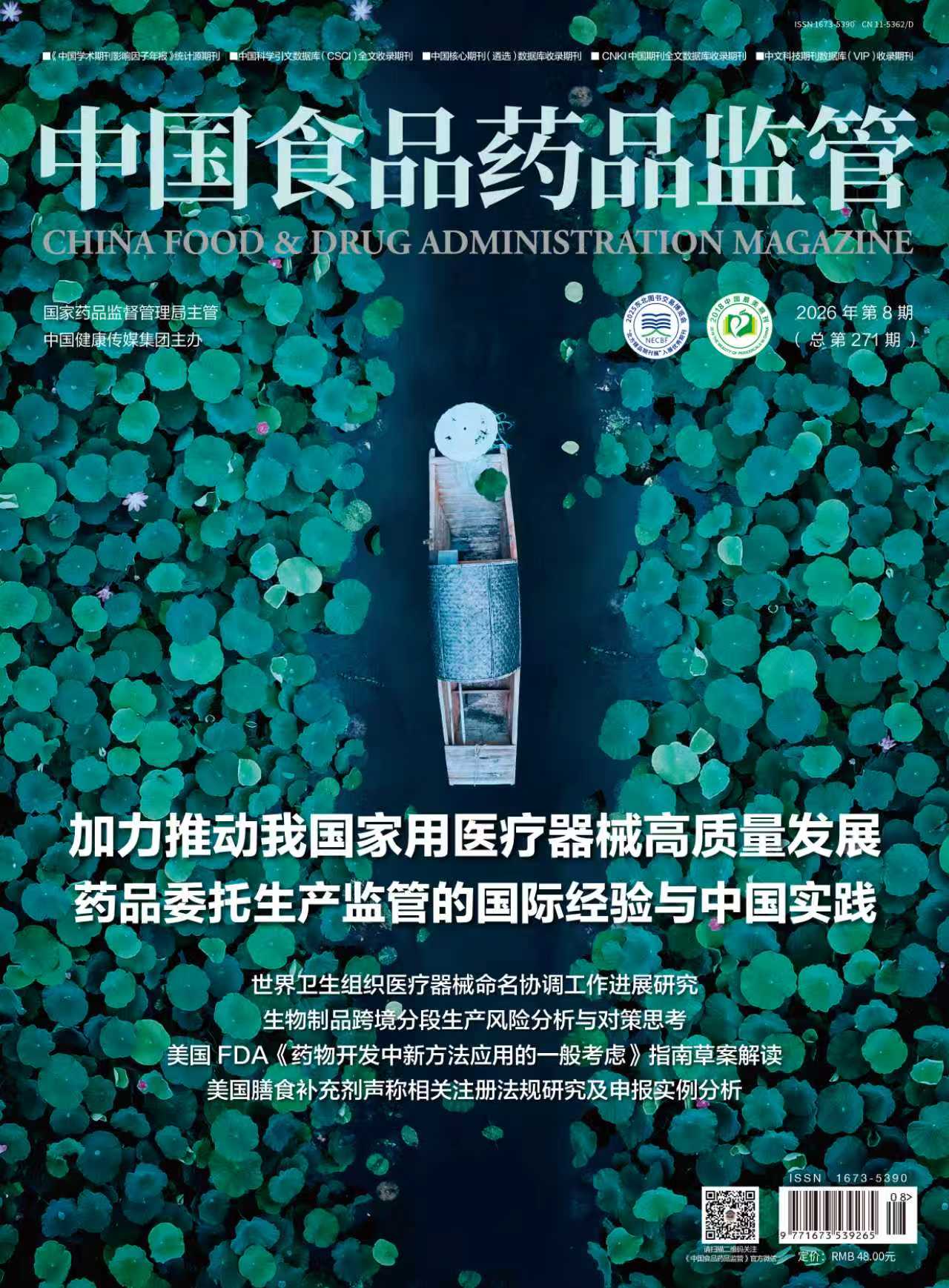
Against the backdrop of the in-depth implementation of the Healthy China Initiative, accelerating population aging, normalization of chronic disease prevention and control, and rising public health awareness, home use medical devices have become an important vehicle for home-based diagnosis and treatment, precise chronic disease management, and self-directed health management for the general public. They also serve as strategic foundational equipment that empowers the Healthy China Initiative, strengthens the health defense of the entire population, and drives new growth momentum for the silver economy. This paper systematically analyzes the current development status, core competitive advantages, emerging business models, and potential safety risks of home use medical devices in China. Based on the existing regulatory framework and drawing on international best practices, this paper proposes optimization pathways and policy recommendations for establishing a scientific, standardized, comprehensive, and efficient regulatory system for home use medical devices.
Since the implementation of the marketing authorization holder (MAH) system in China, contract manufacturing of pharmaceutical products has gradually become an important organizational form for the specialized division of labor in the pharmaceutical industry, the translation of innovative achievements, and the optimal allocation of production capacity resources. In recent years, with the implementation of the revised Drug Administration Law of the People's Republic of China (2019), the continuous refinement of core requirements concerning the MAH's primary responsibility, the regulation of contract manufacturing, and the oversight of contract manufacturers, as well as the formal implementation of the revised Regulations for the Implementation of the Drug Administration Law of the People's Republic of China (2026), the regulation of pharmaceutical contract manufacturing in China has entered a new stage characterized by the simultaneous emphasis on further refinement of responsibilities, risk prevention and control, and quality capability improvement, following the stage of institutional establishment. Meanwhile, the implementation of MAH primary responsibility still needs to be further refined; the contract manufacturing chain has continued to extend; the quality management system and contract manufacturing management capabilities of certain MAHs still need to be improved; the coordination between the quality management systems of entrusting and entrusted parties is complex; the quality capabilities of contract manufacturers vary; and cross-regional regulatory coordination and the closed-loop management of quality risk data still need to be improved. These issues have also given rise to continued public concern regarding the implementation of drug quality responsibilities, the matching of contract manufacturing capacities, the traceability of risk information, and cross-regional regulatory coordination, placing higher demands on regulatory science, industry self-regulation, quality culture development, and digital-intelligent governance. Based on a systematic review of the regulatory experiences of major jurisdictions, including the United States, the European Union, Japan, and Australia, and combined with the evolution of policies and the current practice of pharmaceutical contract manufacturing in China in recent years, this paper proposes the following considerations: further refining the mechanisms for implementation evaluation and dynamic updating of the system; strengthening the two-way selection and ongoing management mechanisms between entrusting and entrusted parties; developing a maturity assessment tool for the quality management systems of contract manufacturers; reinforcing quality culture development; leveraging the role of industry organizations and third-party evaluation; improving cross-regional coordinated regulation and the closed-loop management of risk data; steadily advancing digital-intelligent empowerment based on informatization; and promoting professionalization and internationalization, with a view to providing a reference for the high-quality development of pharmaceutical contract manufacturing in China.
In recent years, the World Health Organization (WHO) has placed increasing emphasis on the global harmonization of medical device nomenclature. Through initiatives such as the Priority Medical Devices (PMD) project, dedicated discussions at significant international forums including the World Health Assembly, and the development of the medical devices information system (MeDevIS), WHO has progressively advanced the harmonization of medical device nomenclature worldwide. This paper systematically reviews the evolution of WHO's work in this field, the current status of MeDevIS, and future directions for nomenclature harmonization. Based on the current practice of medical device nomenclature management in China, the paper further proposes recommendations to promote alignment with international practices and to provide a reference for the formulation of relevant policies and regulatory documents.
Objective: This study aims to systematically review domestic and international indicator systems for evaluating the clinical value of drugs, and to provide a scientific reference for optimizing China's approach to clinical value evaluation. Methods: A systematic search was conducted in databases including China National Knowledge Infrastructure (CNKI), Wanfang, VIP, PubMed, and Web of Science, as well as relevant websites in various countries and regions, covering the period from inception of each database to December 31, 2025. Literature and policy documents related to evaluation indicator systems were systematically collected, and their evaluation scope, perspectives, dimensions, and indicators were analyzed. Results: A total of 119 clinical value evaluation indicator systems for drugs were included, of which 14 were evaluation frameworks established by major national or regional institutions. Published between 2010 and 2025, the annual output averaged 7.44 publications and showed an overall upward trend. The evaluation scope primarily covered general drugs, anticancer drugs, cardiovascular drugs, pediatric drugs, and traditional Chinese patent medicines. Evaluation perspectives primarily included those of healthcare institutions, society/public health, and patients. Core evaluation dimensions were mainly safety, efficacy, and cost-effectiveness, while specific dimensions included innovation, appropriateness, accessibility, and other supplementary dimensions. Conclusion: Research on clinical value evaluation indicator systems for drugs is maturing both domestically and internationally. In China's practice of comprehensive drug evaluation, further efforts are still needed to explore the construction of multi-perspective and multi-dimensional evaluation indicator systems, conduct in-depth research on indicator systems for specific disease areas, and continuously promote the translation of evaluation results into decision-making.
The production of biological products features extended supply chains and complex manufacturing processes. In the context of globalization, cross-border segmented production of bulk drug substances and finished drug products has emerged as an important model to enhance product accessibility and optimize resource allocation. To promote the high-quality development of the biopharmaceutical industry, the National Medical Products Administration (NMPA) launched a pilot program for segmented production of biological products in 2024, and the newly revised Regulations for the Implementation of the Drug Administration Law of the People's Republic of China in 2026 further clarified the conditional liberalization of drug segmented production at the institutional level. Against this background, the production of biological products has shifted from a traditional single-site model to a multi-site segmented production, posing new challenges to both the quality management system and the drug regulatory system. This study analyzes the quality risks and regulatory challenges of cross-border segmented production of biological products. Based on the ICH Q9 (R1) quality risk management framework, a risk assessment framework was developed spanning four dimensions: fundamental risks, technical risks, marketing authorization holder (MAH) responsibility risks, and regulatory risks. Targeted risk prevention and control measures are proposed accordingly. Furthermore, corresponding policy recommendations are put forward from two aspects: strengthening the primary responsibility of MAHs and enhancing the regulatory responsibility of drug regulatory authorities, so as to facilitate the orderly implementation of segmented production of biological products.
New approach methodologies (NAMs), including organoids, organ-on-a-chip technologies, and computational modeling, are driving a paradigm shift in drug research and development. Scientifically evaluating their applicability, reliability, reproducibility, and fitness for purpose has become critical to facilitating their appropriate use, gaining regulatory acceptance, and advancing pharmaceutical innovation. In March 2026, the U.S. Food and Drug Administration (FDA), through its Center for Drug Evaluation and Research (CDER), issued the draft guidance General Considerations for the Use of New Approach Methodologies in Drug Development. This draft guidance establishes a validation framework and provides general recommendations for the use of NAMs in drug development, with the aim of facilitating the reduction and replacement of animal testing and improving the efficiency and human relevance of drug development. This paper provides an in-depth interpretation of the background and key concepts of the draft guidance, with particular emphasis on the core requirements and practical considerations of the FDA's four-dimensional validation framework for NAMs. It further analyzes the implications of the draft guidance for China's pharmaceutical research and development sector and, in light of the current landscape of pharmaceutical development and regulatory science in China, proposes recommendations for the regulatory adoption of NAMs. The study aims to provide a reference for the compliant application and regulatory acceptance of NAMs in drug development in China.
Objective: This study aims to provide policy and regulatory references for claims made when registering traditional Chinese medicines as dietary supplements in the United States. Methods: Using a combination of literature review and case analysis, this study collected and organized relevant policy documents regarding dietary supplement claims from the U.S. Food and Drug Administration (FDA) official website. Concurrently, an analysis was conducted on recent submission cases of dietary supplement claims filed by the China Z. Pharmaceutical Productivity Centre. Results: The FDA has defined three categories of claims that may appear on dietary supplement labels: health claims/qualified health claims, nutrient content claims, and structure/function claims. These three categories differ significantly in content and application requirements. Conclusion: The FDA regulates dietary supplements in a category between food and drugs. While the FDA maintains a relatively lenient approach to claims management, claim registration must still adhere to specific rules. Therefore, manufacturers of traditional Chinese medicines should pay particular attention to claim compliance during the registration process.
Applying to join the Pharmaceutical Inspection Co-operation Scheme (PIC/S) is a critical step for China to achieve international mutual recognition in pharmaceutical inspections and to promote the internationalization and modernization of China's pharmaceutical regulatory system. China submitted a formal application to PIC/S in September 2023 and will undergo a formal assessment of its pharmaceutical inspection system by PIC/S in 2026. Strengthening China's pharmaceutical inspection system by aligning with PIC/S assessment criteria and enhancing coordination and mutual recognition among regional drug inspection agencies are key to passing the PIC/S assessment. This article analyzes the current status and challenges in China's pharmaceutical inspection system, highlighting progress made by provincial inspection agencies in areas such as quality system development, inspection procedure harmonization, and Inspectors' capacity-building. It also reviews the exploratory practices and experiences of inspection agencies from Yangtze River Delta Region in advancing cross-regional coordination in pharmaceutical inspections. Leveraging the PIC/S assessment as an opportunity, inspection agencies in the Yangtze River Delta Region have continuously strengthened their inspection system and have taken the lead in piloting regional inspection coordination to gain regulatory experience. These efforts provide a reference for achieving nationwide mutual recognition in pharmaceutical inspections, support China in successfully passing the PIC/S formal assessment, and ultimately facilitate China's early accession to PIC/S.
In recent years, Chinese courts have increasingly attempted to auction drug marketing authorizations held by judgment debtors to satisfy outstanding debts. This trend has raised an important legal question: whether a drug marketing authorization may be subject to civil enforcement. Prior to the implementation of the marketing authorization holder (MAH) system, a drug marketing authorization, under the general principles of administrative licensing and the Administrative Licensing Law of the People's Republic of China, could neither be transferred nor used as the subject of civil enforcement. Following the introduction of the MAH system, while a drug marketing authorization may be transferred upon satisfaction of statutory conditions and procedures, such a transfer remains subject to regulatory approval. Critically, the preconditions for such a transfer involve regulatory review of highly complex technical matters—an area in which courts lack the capacity to perform substitute review. Moreover, even if a change of MAH is formally approved, the transferee may not necessarily obtain all of the essential technical information and production resources, including the complete manufacturing process documentation. As a result, the transferee may be unable to manufacture the drug or realize the anticipated economic value. Furthermore, following a compulsory auction, if the judgment debtor or the original contract manufacturer refuses to cooperate, the transferee may still be unable to complete the change of manufacturing site and start production. Consequently, significant legal and practical obstacles persist with regard to treating drug marketing authorizations as subjects of civil enforcement. Overcoming these obstacles will require the development of a more refined and tailored institutional framework.
With the rapid development of the medical device industry, traditional regulatory models centered on on-site inspections and record reviews have become insufficient for effectively identifying deep-seated quality risks. Penetrating supervision, as an important innovative regulatory concept proposed in recent years, emphasizes the principle of "substance over form." By end-to-end traceability of both product and data flow, it facilitates in-depth verification of the authenticity and effectiveness of quality management systems. This study systematically constructs a theoretical framework for penetrating supervision in the medical device field. It establishes a five-dimensional foundational penetrating pathway focusing on material flow, equipment data, personnel competence, inspection data, and change management. Furthermore, it develops specialized penetrating systems covering typical scenarios such as contract manufacturing, online sales, affiliated enterprises, and centralized procurement of selected products. The study summarizes three key transformative characteristics, analyzes the significance and challenges of implementation, and proposes optimization considerations. These findings are of great significance for promoting the high-quality development of the industry.
Objective: This study aims to collect and organize data on the filing status and supervision inspection findings of drug clinical trial institutions (hereinafter referred to as "trial institutions") in Guangdong Province from 2020 to 2024, and to summarize the deficiencies identified during these inspections, so as to provide references for improving the management level and regulatory effectiveness of trial institutions. Methods: The filing information of trial institutions in Guangdong Province was extracted from the archival management information platform, and the supervision inspection reports were systematically reviewed. Results: Trial institutions in Guangdong Province are primarily concentrated in the Pearl River Delta region. The implementation of the filing system has enhanced the awareness and participation of primary-level medical institutions in drug clinical trials. From 2020 to 2024, a total of 412 supervision inspections were conducted. Among institutional-level inspections, 77% were rated as "compliant," 21% as "compliant after rectification," and 2% as "non-compliant." Among specialty-level inspections, 74% were rated as "compliant," 23% as "compliant after rectification," and 3% as "non-compliant." The distributions of identified deficiencies were 20% for trial institutions, 5% for ethics committees, and 75% for clinical specialties. Conclusion: Trial institutions in Guangdong Province should further enhance their commitment to drug clinical trials, strengthen quality awareness, subject consciousness, and responsibility awareness, so as to improve their sustainable development capacity and core competitiveness. Regulatory authorities should promote the transition of the supervision model from a "deficiency-oriented" approach to "responsibility fulfillment-oriented" one, fostering the construction of a collaborative governance system that integrates self-responsibility, supervisory accountability, and multi-stakeholder co-governance.
With the continuous development of aesthetic filler medical devices toward longer-lasting effects, tissue regeneration, and functional composite properties, product compositions, mechanisms of action, and clinical applications have become increasingly diversified, imposing higher requirements on non-clinical safety and efficacy evaluation. Animal experiments, as an important component of medical device registration evaluation, serve as key evidence for assessing biocompatibility, tissue response, degradation characteristics, and long-term safety of products. Based on China's Guidelines for the Registration Review of Animal Experiment Studies of Medical Devices, the GB/T 16886 series standards on Biological Evaluation of Medical Devices, the ISO 10993 series standards on Biological Evaluation of Medical Devices, and relevant domestic and international research progress, this paper systematically summarizes the regulatory requirements, general design principles, selection of animal models for different types of filler materials, observation periods, and evaluation priorities for animal experiments of aesthetic filler medical devices. It focuses on key evaluation techniques such as imaging, histopathological observation and quantitative analysis, and molecular biological approaches, as well as safety and efficacy evaluation indicators and statistical design requirements. The main problems existing in current animal experiments and key points of concern in registration review are also analyzed. In the future, the animal experiment evaluation system should be further improved; the application of new technologies such as imaging, digital pathology, artificial intelligence, and multi-omics in animal experiments should be promoted; and the implementation of risk management concepts and the 3R principles (Replacement, Reduction, and Refinement) should be strengthened, so as to advance the standardization, normalization, and precision of animal experiment evaluation, and provide technical references for the research and development, registration review, and clinical safe application of aesthetic filler medical devices.
Objective: This study aims to clarify the critical role of zeta potential in the quality control, stability, and clinical efficacy of doxorubicin hydrochloride liposome injection, and to provide a theoretical basis and practical guidance for quality research, production quality control, and stability evaluation of this formulation. Methods: A systematic explanation of the definition and underlying mechanisms of zeta potential was provided, followed by an analysis of the relationship between formulation design, manufacturing processes, and zeta potential. The influences of dispersing medium, measurement concentration, pH, ionic strength, and other factors on the zeta potential of doxorubicin hydrochloride liposome injection were investigated. A zeta potential measurement method was established and validated, with comparative evaluations conducted using instruments from different brands. Results: Zeta potential can be used to characterize the surface charge of doxorubicin hydrochloride liposome injection, assess colloidal stability, analyze influencing factors, and guide surface modification of nanomaterials. This study clarified the influence patterns of various factors on zeta potential, established a reliable method for measuring zeta potential in doxorubicin hydrochloride liposome injection, and verified its feasibility and reproducibility. Conclusion: Precise regulation and standardized measurement of zeta potential provide experimental evidence and technical references for improving the quality control standards and ensuring the stability of doxorubicin hydrochloride liposome injection, thereby facilitating optimization of formulation processes and quality evaluation criteria.
Objective: This study aims to characterize quality and safety risks among cosmetic manufacturers and to develop a profile of high-risk firms that can support precise and efficient targeted supervision by regulatory authorities, using Guangzhou as a case study. Methods: A total of 109 cosmetic manufacturers identified as high risk in Guangzhou during 2023 to 2024 were included. Regulatory data were extracted from the "Guangdong Smart Drug Administration" system and analyzed, covering geographical distribution, registered capital, years of operation, staffing of key positions, frequency of quality manager turnover, and causes of non-compliance identified through product sampling inspections. Results: High-risk cosmetic manufacturers in Guangzhou exhibited clear and consistent characteristics. Approximately 77% were geographically concentrated in Baiyun District. Most were small and micro-enterprises that had been operating for more than six years, collectively accounting for over 70% of both the total number of high-risk enterprises and the instances of non-compliance. Internally, these enterprises commonly demonstrated weak management systems, reflected in relatively low educational attainment among legal representatives, insufficient allocation of qualified quality personnel, and high turnover of quality managers. Product-related risks were mainly concentrated in hair dye, skincare, and sunscreen categories, with non-compliance predominantly associated with raw material issues. Conclusion: High-risk cosmetic manufacturers in Guangzhou present a distinct and identifiable risk profile. Regulatory strategies should therefore shift from generalized supervision to targeted, risk-based approaches. Priority should be given to small and micro-enterprises and long-established manufacturers in Baiyun District, with regulatory focus placed on raw material compliance and production process consistency, thereby enabling differentiated and dynamic risk management.



 Current Issue